English
 Português
 عربى
عربى 中文简体
中文简体A portable air compressor for tires is a compact pump that fills a tire to the manufacturer’s specified pressure using a 12V cigarette-lighter outlet or a built-in rechargeable battery, no gas station air hose needed. That definition explains the real value: a slow leak stopped in two minutes, a tire pressure check done in your garage rather than on a cold morning at the pump, and no reliance on a service station that may or may not have a working line. For most drivers, the compressor is the tool that makes correct tire pressure a routine rather than a trip.
Content
Why Tire Pressure Is a Performance Factor
Correct tire pressure is the cheapest performance improvement most drivers never make. A tire running 10 PSI below its door-jamb reading increases rolling resistance, slows steering response, and raises the sidewall temperature every mile you drive. That extra heat is what eventually causes belt separation and premature tread wear. Keeping the pressure within the manufacturer’s range improves fuel economy, shortens braking distance, and gives the contact patch the shape the suspension was designed around. A portable compressor turns that maintenance into a monthly habit instead of an occasional hassle.
Key Compressor Specs That Matter
Four numbers decide whether a portable air compressor will serve you well: maximum pressure, flow rate, duty cycle, and gauge accuracy. Maximum pressure must exceed the highest pressure you plan to fill; flow rate controls your wait time; duty cycle says how long the motor can run before heat forces a rest; gauge accuracy prevents the two most common mistakes, over-inflation and under-inflation.
| Specification | Why It Matters | Good Baseline |
|---|---|---|
| Maximum pressure | Must be above your tire’s required psi | At least 10 psi above the door-jamb figure |
| Flow rate | Controls fill time | 20 L/min or more for passenger cars |
| Duty cycle | Keeps the motor from overheating | 25% or higher for long fills |
| Gauge accuracy | Prevents over- and under-inflation | Within 1 psi of true pressure |
Maximum Pressure and Flow Rate
Flow rate determines how long you wait, and cylinder diameter is the key factor in that speed. A unit delivering 20 L/min adds about 10 PSI to a standard 215/55R17 tire in roughly three to four minutes, while a 30mm large-cylinder unit moves noticeably more air per stroke. The practical rule is simple: if you inflate passenger-car tires, a flow rate of 20 L/min or more is enough; if you also top up van or SUV tires, aim for 30 L/min or higher.
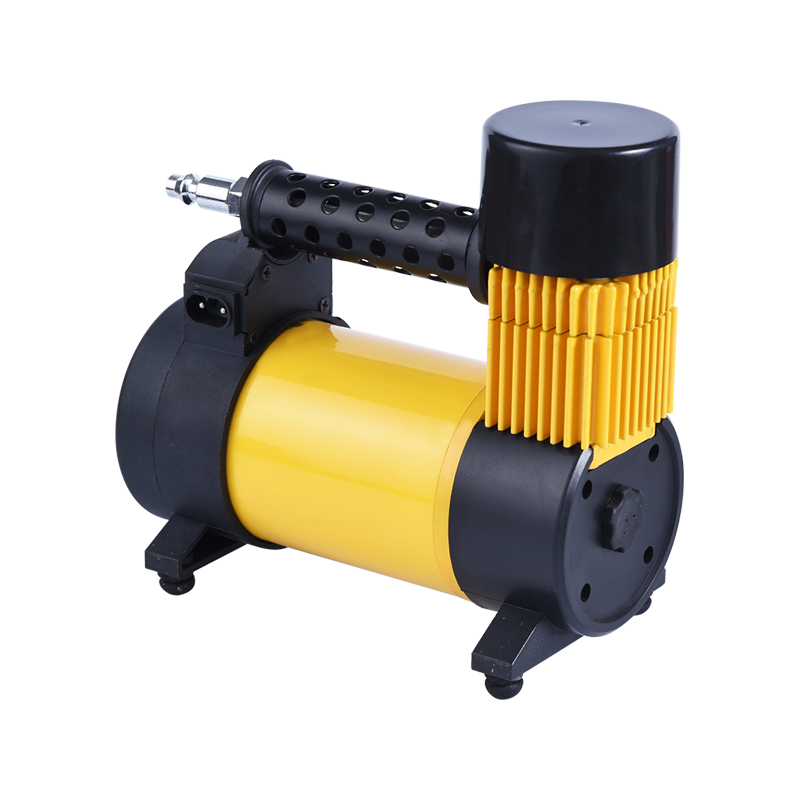 30mm Large Cylinder Air Pump for Fast Tire InflationWith a 30mm cylinder, this pump delivers high airflow to inflate larger tires quickly, while its heat-dissipating design helps maintain performance during longer filling sessions.View Product →
Duty Cycle and Heat Management
A compressor with a 25% duty cycle is not designed to run longer than 2.5 minutes out of every 10 without a cool-down break. This matters because a large tire may take three or four minutes to reach the target pressure, and an overloaded motor starts blowing hot air slowly before it shuts down. The safety and stability of large-cylinder vehicle air pumps is largely a matter of heat dissipation. Thicker cylinder walls and a wider metal surface let the motor shed heat faster, keeping duty-cycle time on your side.
Gauge Accuracy
A digital gauge with 0.5 PSI resolution is the safest choice for modern passenger-car tires. Analogue needles on budget compressors can wander 2-3 PSI, which is enough to make a 36 PSI tire actually sit at 39 or 33. Digital units let you set a target, watch it climb, and stop at the exact number, especially helpful for low-profile tires with narrow recommended ranges.
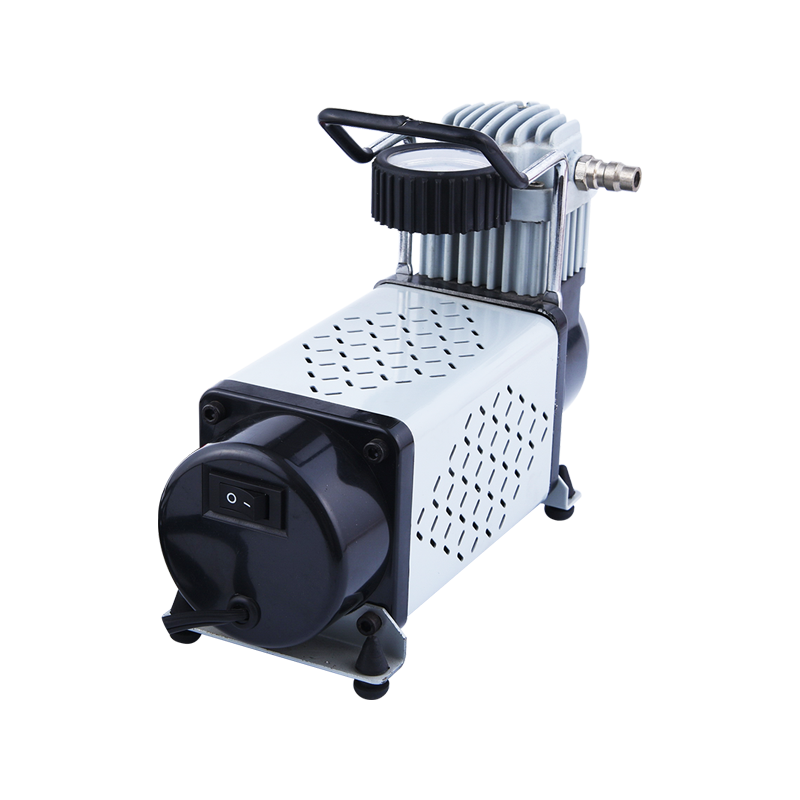 Portable Air Pump with Digital Gauge for Precise InflationThis portable pump features a digital gauge with fine resolution, allowing you to set and reach exact tire pressures, making it ideal for roadside emergencies and regular maintenance.View Product →
12V Corded or Rechargeable Cordless?
If you want a compressor that is always ready, a 12V corded unit is the most reliable choice; if you need freedom from the car battery, a rechargeable cordless unit makes more sense. Corded pumps run continuously from the alternator while the engine is idling, so they never lose power mid-fill. Cordless models are more portable, which is why they are suitable for outdoor and emergency situations where the car cannot be parked next to the flat tire.
| Kind | Power Source | Typical Flow | Best Use Case |
|---|---|---|---|
| 12V corded | Cigarette-lighter socket | 20-35 L/min | Roadside emergencies, everyday driver |
| Rechargeable cordless | Built-in lithium battery | 10-25 L/min | Multi-vehicle households, remote locations |
For a highway shoulder or a darkened parking lot, corded wins because the engine keeps pumping power. For a monthly check in a garage with an outlet nearby, cordless is easier: you carry the tool to the tire instead of pulling the tire to the socket. Buy the one that matches the way you actually drive.
What to Look for Before You Buy
The best portable air compressor for tires is the one whose feature set matches your specific driving routine, not the one with the longest marketing spec sheet. If you drive a heavy SUV, prioritize flow rate and duty cycle. If you commute in a compact sedan, gauge accuracy and compact storage matter more. The details below decide whether the compressor becomes a permanent trunk fixture or a device you never touch.
Hose Length and Valve Fit
A 6-foot hose is the practical minimum for most passenger cars and SUVs. A 3-foot hose might reach a standard sedan’s valve stem from the back seat, but it will not comfortably reach a van tire on the far side. The valve head should thread onto Schrader stems snugly, and if you inflate bicycles, a Presta-friendly fitting is a bonus.
Noise and Vibration
Noise and vibration are secondary to performance, but they determine how pleasant a roadside fill is. Most portable compressors sit in the 75-85 dB range, comparable to a kitchen blender. Rubber feet and a solidly mounted motor do more to reduce sympathetic shaking than a foam-lined case ever will.
Versatility for Multiple Jobs
A multi-purpose pump is the best value if you also own a bike, basketball, or camping mattress. Units that include a needle valve adapter and a tapered nozzle cover both Schrader and Presta valves without extra purchases. The practical argument for versatility is simple: a vehicle air pump that inflates cars, basketballs, and bicycles stays useful year-round instead of disappearing into a spare-tire well.
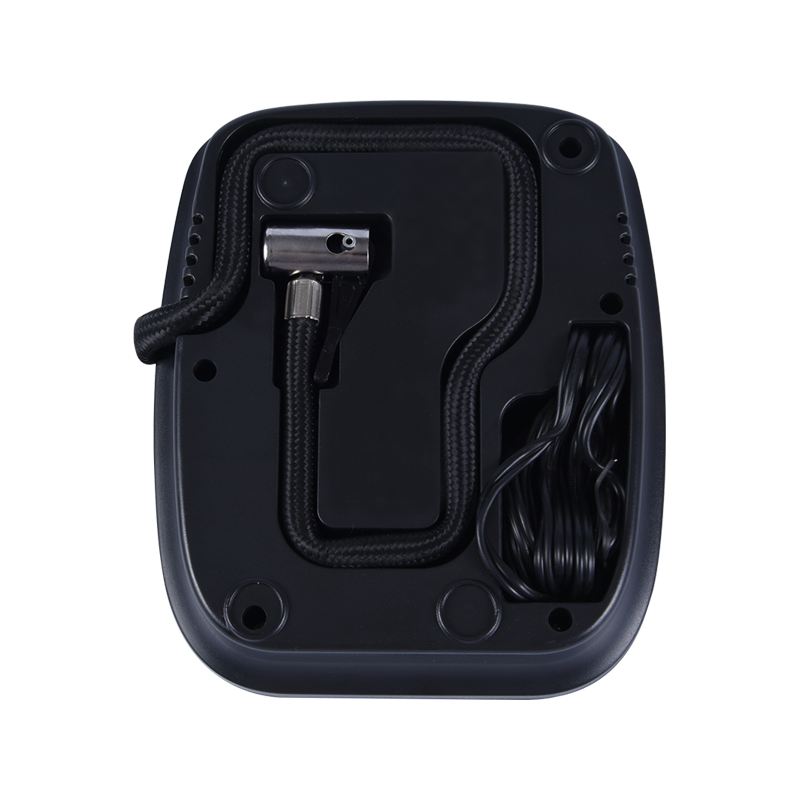 Multi-Purpose Air Pump for Cars, Balls, and BikesEquipped with adapters for Schrader and Presta valves, this pump inflates car tires, sports balls, and bicycle tubes, providing a versatile tool for various inflation needs.View Product →
How to Use a Portable Air Compressor Correctly
Correct procedure is simple, but skipping one step is the reason most roadside fills fail. The order is: read the door-jamb sticker, start the engine, screw the valve head on firmly, inflate to the target pressure, and recheck after five minutes. Follow these steps and you avoid the two biggest mistakes: inflating a cold tire to the hot-tire reading and over-inflating because the gauge lags behind the true pressure.
- Check the driver’s door jamb for the manufacturer’s cold-tire pressure.
- Start the engine, then plug the compressor into the 12V socket.
- Screw the valve head onto the stem until it seats firmly; a leaking fitting causes false readings.
- Run the compressor and watch the gauge. Stop at the target pressure; for digital units, use the preset function.
- Release the fitting, close the valve cap, and recheck pressure with a separate gauge after five minutes to catch valve-core leaks.
Maintenance and Common Mistakes
A portable compressor lasts for years if you keep the air filter clean, avoid running it beyond its duty cycle, and store it away from heat and moisture. The most common mistake is running a 12V unit while the engine is off; it discharges the battery and leaves you with a dead car and a dead pump. Over-tightening the valve head is another frequent error; a firm hand-tight turn is enough and avoids stripping the stem threads.
- Wash the air filter every three months; a blocked filter restricts airflow and lengthens every fill.
- Let the motor cool for five minutes after a long fill before storing it.
- Check the gauge against a trusted gauge once a year to catch drift.
- Store the compressor in a dry zip bag to keep moisture out of the motor windings.
FAQ
Can I use a portable air compressor on a completely flat tire?
Yes, if the tire did not run while flat. A tire that has been driven on while deflated may have internal sidewall damage, and inflating it is unsafe. If it has not been driven on, most portable compressors can bring it back to pressure, but a slow leak should be checked by a tire shop afterward.
What pressure should I set the compressor to?
Use the driver’s door-jamb sticker, not the sidewall, which shows the maximum pressure rather than the recommended operating pressure. Most passenger cars sit between 32 and 38 PSI; some trucks and SUVs require 45-50 PSI.
How long does a portable air compressor take to inflate a tire?
A 20-35 L/min unit adds about 10 PSI to a standard passenger tire in three to six minutes. A high-flow model with a large cylinder can do the same job in under three minutes, provided the duty cycle allows continuous use.
Should I keep the engine running while using a 12V compressor?
Yes. The alternator supplies the power while the engine runs, so the car battery stays charged. If you run the compressor with the engine off, you risk draining the battery to the point where the car will not start.
Can the same compressor inflate bike tires and basketballs?
If it includes a needle valve adapter and a tapered nozzle, yes. Many multi-purpose models come with those adapters in the same storage bag, allowing you to switch from a car valve stem to a Presta bike valve or a basketball needle without extra tools.