English
 Português
 عربى
عربى 中文简体
中文简体Content
What Is a Portable Air Compressor for Off-Roading?
A portable air compressor for off roading is a 12V air pump you carry in your vehicle so you can lower tire pressure for traction on loose terrain and restore it before driving on public roads. The right model is defined by output, duty cycle, pressure measurement, and portability, not by peak pressure claims alone.
Off-road tires need different pressures depending on the surface. Airing down increases the tire’s footprint and improves grip on sand, mud, gravel, and rock. The trade-off is that you need a dependable way to air back up, which is exactly what a portable compressor provides.
What to Look for in an Off-Road Air Compressor
Choose the smallest portable unit that can reinflate your largest tire in a reasonable time, with a gauge you can trust and a duty cycle that matches how you drive.
Output and Inflation Speed
Output determines how long you wait beside each tire. Larger tires need more air volume, so a pump with a larger cylinder diameter moves more air per revolution. For bigger tires and frequent trips, a high-flow unit such as the HC668 30mm large cylinder diameter vehicle air pump is built to shorten the waiting time.
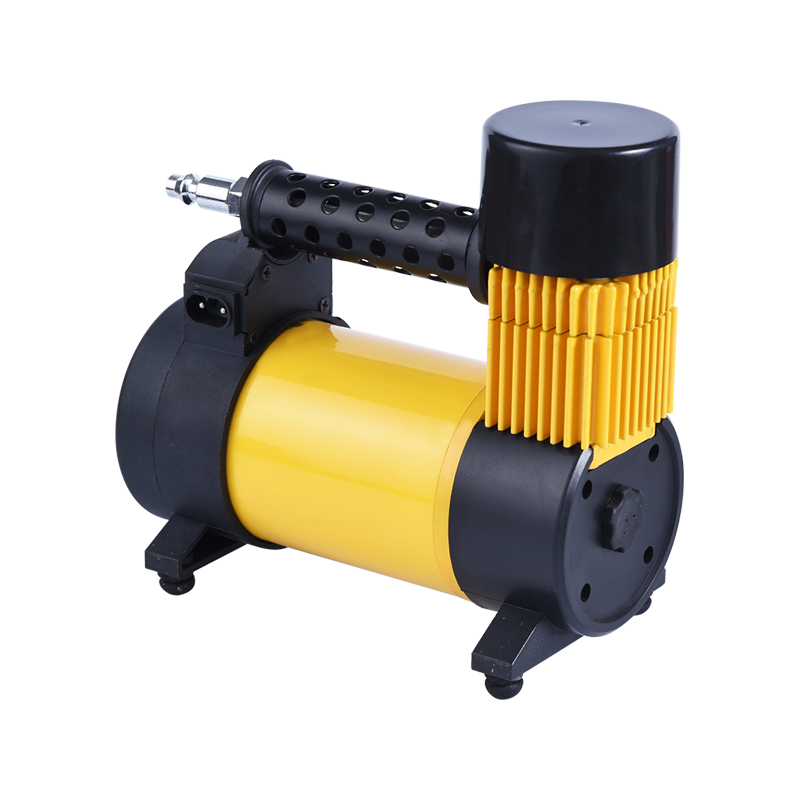 Wholesale HC668 30mm Large Cylinder Diameter Vehicle Air Pump Suppliers, FactoryNingbo Kede Electric Technology Development Co., Ltd is China OEM/ODM HC668 30mm Large Cylinder Diameter Vehicle Air Pump suppliers and H...View Product →
Duty Cycle and Heat Management
Duty cycle tells you how long a compressor can run before it needs to cool down. A unit with a 50 percent duty cycle should run for about one minute, then rest for one minute. Before buying a high-output pump, review the safety and stability of large cylinder diameter vehicle air pumps.
Pressure Gauge Accuracy
An accurate pressure gauge is more important than a fast compressor, because airing up to the wrong pressure creates handling and tire wear problems. Analog gauges are common, but digital readouts are easier to read in bright sunlight. If you want a clear display, the HC6593 portable vehicle air pump with digital pressure gauge removes much of the guesswork.
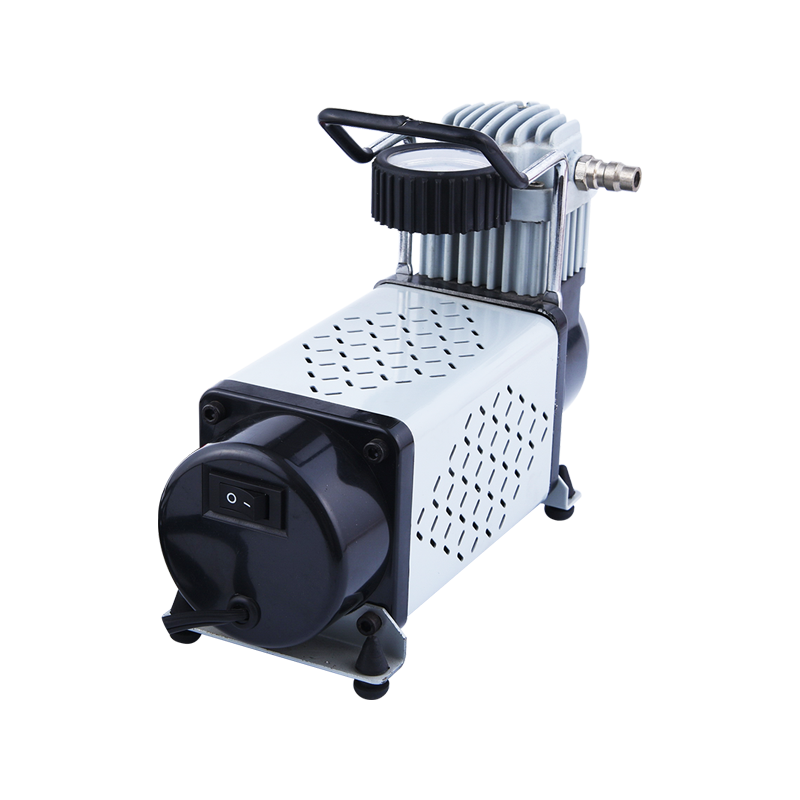 Wholesale HC659-3 Portable Vehicle Air Pump With Digital Pressure Gauge SupplierNingbo Kede Electric Technology Development Co., Ltd is China OEM/ODM HC659-3 Portable Vehicle Air Pump With Digital Pressure Gauge suppl...View Product →
Power Source and Connectors
Most portable off-road compressors run from a 12V cigarette lighter socket, battery clamps, or both. Cigarette lighter cords are convenient, but high-draw compressors can overheat a weak socket. For sustained inflation, run the engine and use a direct battery connection when the compressor supports it.
Portability and Build Quality
The best portable compressor is rugged enough to bounce around a cargo area yet compact enough to store out of the way. In remote areas, ask whether a portable vehicle air pump is suitable for outdoor or emergency situations. For a balanced everyday model, the HC651B portable vehicle air pump with pressure gauge covers most trail use without taking over the entire cargo space.
 Wholesale HC651B Portable Vehicle Air Pump With Pressure Gauge Suppliers, FactorNingbo Kede Electric Technology Development Co., Ltd is China OEM/ODM HC651B Portable Vehicle Air Pump With Pressure Gauge suppliers and ...View Product →
Portable vs Hard-Mounted Compressor Setups
For most off-road drivers, a portable compressor is the more practical option because it costs less, removes easily, and can serve multiple vehicles. Hard-mounted onboard systems are useful when you air up constantly, but they require installation and permanent wiring.
| Setup | Best for | Main trade-off |
|---|---|---|
| Compact portable | Occasional trail driving and smaller tires | Slower reinflation after airing down |
| High-flow portable | Frequent off-road trips and larger tires | Needs more storage space and electrical current |
| Hard-mounted onboard system | Serious rock crawling or overlanding | Requires installation and permanent wiring |
The rest of this guide focuses on portable units because they offer the best balance of flexibility, cost, and ease of installation for most off-road drivers.
How to Use a Portable Air Compressor on the Trail
The safest procedure is to air down before the obstacle and air up before public roads. Follow a simple sequence to avoid mistakes and protect your tires.
- Find a level spot and set the parking brake.
- Remove the valve stem caps and check the current pressure with a reliable gauge.
- Air down to the pressure recommended for your terrain and vehicle weight.
- After the trail, plug the compressor into the 12V socket or battery clamp connection.
- Connect the hose, set the target pressure on the gauge, and let the unit run until it reaches that pressure.
- Check each tire again with the compressor gauge or a separate gauge after inflation.
- Let the compressor cool down before putting it away.
Maintenance and Safety Tips
A compressor that is maintained properly will last far longer than one that is ignored. Off-road dust, heat, and dead batteries shorten the life of any air pump, so build these habits into your routine.
- Keep the air intake free of dust, mud, and debris.
- Inspect the power cord and connector for melting, cracks, or loose contacts.
- Respect the duty cycle; if the pump is too hot to touch, stop and let it cool.
- Use a tire gauge to verify final pressure instead of trusting the compressor’s gauge blindly.
- Never exceed the maximum pressure molded on the tire sidewall.
- Store the compressor in a dry spot where it will not roll around during hard driving.
Why the Manufacturer Matters
The compressor is only as dependable as the company that builds it and supports it. When you buy from a manufacturer with a long production track record, you are more likely to get consistent quality, proper testing, and reliable aftermarket support.
Ningbo Kede Electric Technology Development Co., Ltd., the company behind this product line, has manufactured vehicle air pumps and 12V accessories since 1992. Its factory in Yuyao covers 35,000 square meters, with more than 100 technical and production staff. The company states compliance with ISO 9001 quality systems and holds CE, ROHS, and GS certifications across its range. For off-road buyers, this matters: a pump is a safety tool, and consistent manufacturing is part of the equation.
Frequently Asked Questions
Here are the questions off-road drivers ask most often when choosing a portable air compressor.
Do I really need a portable air compressor for off-roading?
If you plan to air down, yes. Without a compressor you can still lower pressure, but you will struggle to reinflate safely. A portable air compressor for off roading restores your tires to a street-friendly pressure before you leave the trail.
What size compressor is best for overlanding?
There is no universal size. Match the compressor’s output to the volume of your largest tire. Large cylinder diameter units are better for heavy tires, while compact units are fine for occasional use with moderate tires.
How long does a portable compressor take to air up a tire?
It depends on the pressure increase and the pump’s flow rate. A high-output unit can often reinflate an off-road tire in a few minutes, while a small emergency model can take much longer. Choose a model that fits the way you drive.
Should I run the engine while using the compressor?
Yes, for any sustained inflation session. Running the engine keeps the battery charged and prevents voltage drop, which also helps the compressor run closer to its rated output.
What does duty cycle mean on an air compressor?
Duty cycle is the ratio of run time to rest time. For example, a 50 percent duty cycle means one minute of running should be followed by one minute of cooling. Respecting it prevents overheating and extends motor life.
Final Thoughts
The right off-road air compressor combines enough flow for your tire size, a duty cycle that matches your trips, and a pressure gauge you can read. A portable unit is the most flexible choice for most drivers because it works across vehicles, takes up little space, and does not require permanent installation. Focus on these fundamentals, and your compressor will become one of the most useful tools you carry off road.