English
 Português
 عربى
عربى 中文简体
中文简体The right portable air compressor for off-road use comes down to four numbers: airflow, duty cycle, maximum pressure, and the power your vehicle can actually deliver. Everything else is convenience. Whether you air down for sand, recover after a muddy climb, or help a fellow driver with a leaking tire, a compressor that matches your tire size and driving style is worth more than an expensive unit that cannot finish the job. This guide explains what those specs mean, how portable and onboard systems compare, and which features save real time at the trailhead.
Content
- What Is a Portable Air Compressor for Off-Road Use?
- Why You Need One on the Trail
- The Specs That Actually Matter Off-Road
- Portable vs Hard-Mounted Systems
- Power Supply and Connection Options
- Gauges, Hoses, and Small Features That Save Time
- Choose by Driving Style and Tire Size
- Maintenance and Operating Tips
- Frequently Asked Questions
What Is a Portable Air Compressor for Off-Road Use?
A portable air compressor for off-road use is a self-contained 12V or 24V pump that inflates tires after airing down, repairs, or slow leaks. It is designed to run from the vehicle electrical system, live in the cargo area, and work reliably in dusty, hot, or remote conditions. The key difference from a basic car pump is the combination of flow rate, duty cycle, and build quality needed to fill multiple large tires in a row without overheating.
Why You Need One on the Trail
Air down, drive, air back up: this is the basic rhythm of off-road travel, and a portable compressor is the tool that closes the loop. Lowering tire pressure to around 15–20 psi increases the tire footprint on sand, rock, and mud, but driving home at that pressure is unsafe. You need enough air to restore highway pressure before reaching pavement. Emergencies also happen: a sidewall cut, a slow leak, or helping another driver recover after a failed climb. The question of whether a portable vehicle air pump is suited to outdoor or emergency use comes down to exactly that: sustained output and reliable power.
The Specs That Actually Matter Off-Road
Flow rate and duty cycle decide whether a compressor finishes a four-tire job or shuts down halfway. Maximum pressure matters less for off-road use because most tires need only 35–50 psi, which nearly every portable unit can handle. Power draw determines how long you can run on a battery or how thick the wiring and connectors need to be.
- Airflow (CFM): The higher the airflow at working pressure, the faster the fill. Ratings at 0 psi are misleading, so compare figures at 30 psi or higher whenever they are available.
- Duty cycle: The ratio of run time to rest time before cooling is needed. A 50% duty cycle means five minutes on, five minutes off. Low-duty-cycle pumps may overheat before the fourth tire is done.
- Maximum pressure: Almost every off-road-oriented unit reaches 100 psi or more, so this rarely limits a tire inflation job.
- Power connection: Longer and thicker cables reach tires without stretching and handle sustained current better than thin, short leads.
| Check | Why It Matters | Off-Road Need |
|---|---|---|
| Airflow rating at working pressure | Real fill speed for 33–35-inch tires | At least enough to fill one tire in under five minutes for frequent use |
| Duty cycle | Sustained multi-tire inflation without overheating | 50% or higher; continuous-duty models for heavy use |
| Pressure gauge accuracy | Repeatable air-down and air-up pressures | Analog is fine; digital reduces guessing |
| Auto shutoff or preset pressure | Prevents over-inflation after airing down | Strongly useful in sunlight glare or when multitasking |
Portable vs Hard-Mounted Systems
Portable units win for most weekend off-roaders because they are simple, affordable, and easy to store; hard-mounted systems only earn their weight if you air down several times a day. A portable unit can be moved between vehicles, stored indoors, and used for other tasks at home. Hard-mounted setups offer cleaner wiring, better heat management, and faster operation, but they require mounting, relay installation, and a dedicated space in the vehicle. For most drivers who air down at the trailhead and back up at the end of the day, a portable compressor is enough.
| Factor | Portable | Hard-Mounted |
|---|---|---|
| Installation | Plug-in or battery clamps, no modification | Requires mounting, relay, and wiring work |
| Capacity | Limited by the vehicle’s 12V/24V output | Can use larger, continuous-duty motors |
| Heat and duty cycle | Limited by case size and cooling design | More space for thermal management |
| Flexibility | Move between vehicles easily | Fixed to one vehicle |
| Typical buyer | Weekend trail use, overland trips | Regular recovery work, convoy support |
Power Supply and Connection Options
Your compressor is only as reliable as the power feeding it. Most portable pumps plug into the 12V socket, but those sockets typically support 10–15A, and continuous high current can overheat both the plug and the socket. Battery clamps are safer when the pump draws high current for several minutes. If you drive a 24V truck, look for dual-voltage support or a 24V-specific unit, unless you carry a converter. Always keep the engine running while inflating so the alternator supplies the current and the battery stays charged. If the cable becomes warm or the plug body softens, that is a warning to stop and check the electrical path.
Gauges, Hoses, and Small Features That Save Time
A good gauge and a long enough hose matter more than most buyers expect. Digital pressure gauges are easier to read in direct sunlight and at night, and some units let you set the target pressure and stop automatically. A coily hose that reaches all four tires without moving the vehicle saves a surprising amount of time at the end of the day. Check whether the included nozzles and adapters cover tire valves, air mattresses, and other inflatables you carry. If you want to reduce guesswork when resetting pressures, a portable vehicle air pump with a digital pressure gauge lets you set the target and stop automatically.
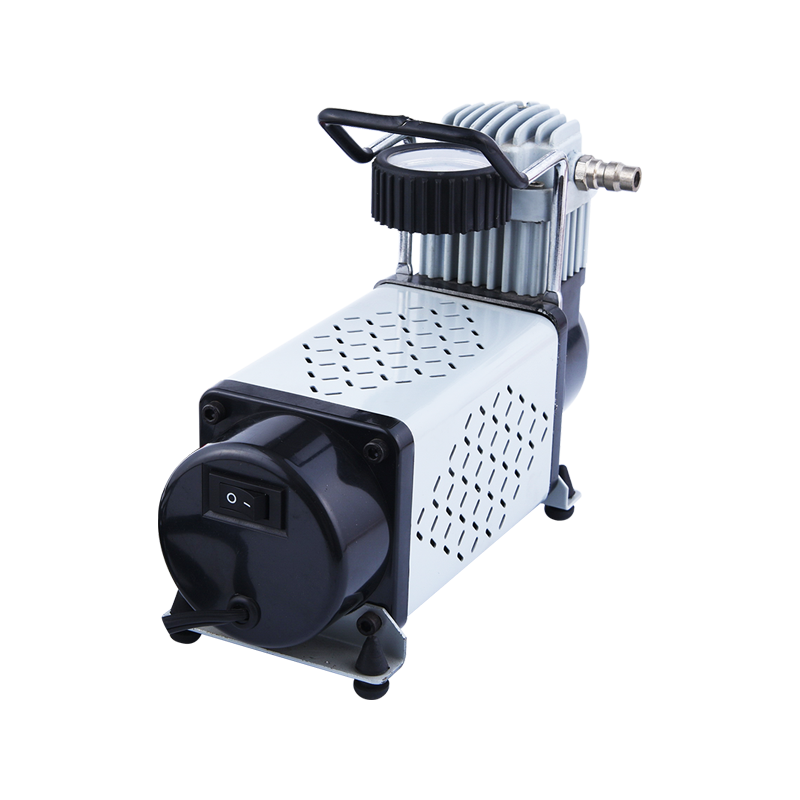 Wholesale HC659-3 Portable Vehicle Air Pump With Digital Pressure Gauge SupplierNingbo Kede Electric Technology Development Co., Ltd is China OEM/ODM HC659-3 Portable Vehicle Air Pump With Digital Pressure Gauge suppl...View Product →
Choose by Driving Style and Tire Size
Match the compressor to the biggest tire you actually run, then work backwards from the pressure range you use. A driver on 31-inch all-terrains has different needs than a fully loaded overland truck on 37-inch tires. The good news is that manufacturers usually organize the vehicle air pump lineup by cylinder size and gauge style, which makes it easier to spot the class that fits your use.
- Daily driver and light trails: A compact unit with a pressure gauge covers occasional air-downs. For stock-size tires and forest roads, a portable vehicle air pump with a pressure gauge
 Wholesale HC651B Portable Vehicle Air Pump With Pressure Gauge Suppliers, FactorNingbo Kede Electric Technology Development Co., Ltd is China OEM/ODM HC651B Portable Vehicle Air Pump With Pressure Gauge suppliers and ...View Product → is enough for a four-tire air-down cycle.
 - Weekend trails and 33-inch tires: Look for higher airflow, a reliable duty cycle, and an automatic shutoff. This is the most common category for overland riders who air down several times per trip.
- Long overland trips and 35-inch tires: Prefer a larger cylinder or dual-cylinder design. For sustained runs on bigger tires, a 30mm large-cylinder-diameter vehicle air pump
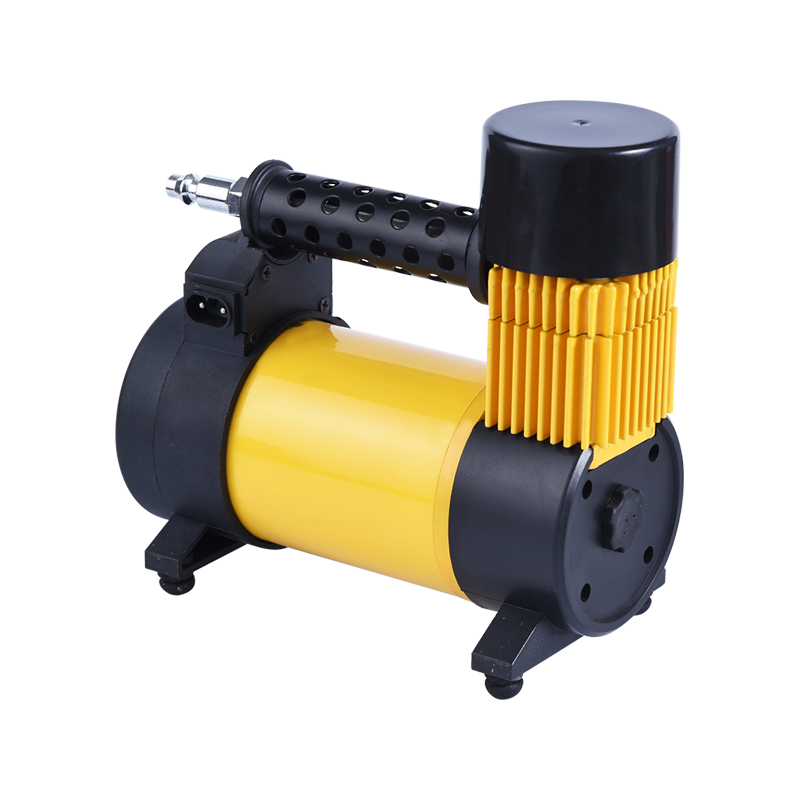 Wholesale HC668 30mm Large Cylinder Diameter Vehicle Air Pump Suppliers, FactoryNingbo Kede Electric Technology Development Co., Ltd is China OEM/ODM HC668 30mm Large Cylinder Diameter Vehicle Air Pump suppliers and H...View Product → shifts the balance toward speed and thermal margin.
 - Heavy trucks or fleet use: Consider dual-voltage and continuous-duty options, since airing up large tires in sequence places a heavy load on both the pump and the electrical system.
Maintenance and Operating Tips
Keep the compressor cool and the connections clean; that is 80% of long-term reliability. Run the pump with the engine idling so the electrical system stays stable, and stop if the housing becomes too hot to touch. After dusty trips, wipe the cooling fins and check the air filter when one is fitted. Store the unit with the hose and adapters dry, and avoid kinking the hose or over-tightening the valve chuck. Following these steps makes a real difference across a full season of off-road use.
- Check that the battery clamps or plug contacts are clean before every use.
- Set the pressure switch or gauge before starting the pump.
- Let the pump cool to ambient temperature before storing it after a multi-tire inflation.
- Inspect the hose for cracks or leaks at the valve end, especially after winter storage.
Frequently Asked Questions
These are the questions off-road drivers ask most often when choosing a portable air compressor.
- Do I need a dual-cylinder compressor for off-road use? Not always. A single-cylinder unit with a realistic duty cycle can handle most weekend trips, but dual-cylinder designs usually finish faster and tolerate longer running times.
- What psi should I air down to off-road? Many drivers start around 15–20 psi for sand and rock, and 20–25 psi for gravel and washboard roads. Tires with shorter sidewalls and heavier loads need less aggressive pressure reduction.
- How long does it take to fill a 35-inch tire? It depends on airflow, pressure range, and tire volume. A higher-CFM unit can go from 15 to 35 psi in a few minutes, while a low-flow pump may take much longer and risk overheating before the fourth tire.
- Can I run the compressor with the engine off? It will run, but it risks draining the battery. Keeping the engine running lets the alternator handle the current draw.
- What is the difference between analog and digital pressure gauges? Analog gauges are mechanical, simple, and reliable. Digital gauges are easier to read precisely and often support preset shutoff. Both work well if the calibration is correct.
The best approach is simple: define your tire size, decide how often you air down, and be honest about your patience at the end of a long day. A portable air compressor for off-road use is not a complex purchase once those three points are clear. Focus on airflow at working pressure, duty cycle, wiring quality, and a gauge that gives you confidence in the number on the display. With those basics covered, you can air down anywhere and return to pavement without second-guessing your gear.