English
 Português
 عربى
عربى 中文简体
中文简体A portable air compressor and battery charger is normally a pairing rather than a single box: a compact pump that inflates tires, plus whatever keeps its power source ready to work. Get the pairing wrong and you end up with a pump that only runs when the car battery is healthy, or a battery pack that is flat exactly when you need it most.
The short answer: if you inflate tires at home or at a workshop with the engine running, a 12-volt pump that plugs into the cigarette lighter is the cheapest and most dependable option. If you need air when the vehicle battery is dead, or when you are away from any car, the pump has to carry its own battery and its own charger. Everything else, from pressure ratings to cylinder size and hose fittings, matters only after that decision is made.
Content
What the Phrase Usually Covers
Three different products are sold under this search term, and they solve different problems.
- Jump-starter with a built-in inflator. One battery pack, two jobs: booster clamps for a flat battery and a compressor for tires. Convenient, but the compressor shares its energy with an engine-cranking job.
- 12V compressor plus a maintenance charger. The pump draws power from the vehicle's accessory socket, while the charger is a small trickle or maintenance unit that keeps the car battery topped up between drives. This is the classic driveway and workshop combination.
- Rechargeable cordless inflator with its own charger. Nothing connects to the car at all. It charges from mains power or USB and inflates wherever you carry it.
Mixing these up is the most common reason people end up disappointed. A cordless inflator bought for a fleet of vans will not keep pace with daily use, and a lighter-powered pump bought for emergency kit is useless when the battery it depends on is the very thing that failed.
Power Source Decides Almost Everything
Lighter-powered pumps are faster and cheaper to run, but they depend on a healthy car battery; battery-pack inflators work anywhere but slow down as the pack discharges. That single trade-off explains most of the numbers you will read on a product page.
| Point of comparison | 12V cigarette-lighter compressor | Rechargeable battery-pack inflator |
|---|---|---|
| Power source | Vehicle accessory socket, engine recommended | Internal lithium or lead-acid pack |
| Car tire, 28 to 32 psi | About 1.5 to 3 minutes with a 30 mm cylinder | About 3 to 6 minutes, slower as the pack drains |
| Works with a flat car battery | No | Yes |
| Duty cycle | Roughly 10 minutes on, 10 minutes resting | Limited by pack temperature and remaining capacity |
| Weight and storage | 0.8 to 1.5 kg plus cord and hose | 1 to 2 kg plus the charger |
| Best suited to | Regular top-ups, small fleets, workshop use | Roadside emergencies, cyclists, campers |
| Main risk | Blown fuse or a drained starting battery | Forgotten charging, aged cells, lower peak pressure |
Notice how the numbers shift with the pack. A cordless inflator that fills a tire in 3.5 minutes at full charge may need 6 minutes at 30 percent capacity, and the last 2 psi are always the slowest. A lighter-powered pump holds a steady speed because the alternator feeds it, but that also means it is loading a circuit designed for a phone charger and a dash camera rather than a 12-amp motor.
The Numbers Worth Checking Before You Pay
- Maximum pressure. 100 to 150 psi covers passenger car tires (28 to 36 psi), bicycle tires (up to roughly 100 psi) and most sports balls (8 to 15 psi). Ratings above 150 psi target truck or RV use.
- Cylinder diameter and airflow. A 30 mm cylinder moves noticeably more air per stroke than a 19 mm one, which is why large-bore pumps finish a tire in two minutes instead of eight. The safety and stability of large cylinder diameter pumps is worth understanding first, because bigger bores draw more current and run hotter.
- Duty cycle. Most compact pumps are rated near 10 minutes running and 10 minutes resting. Ignoring the rest period is the fastest way to burn out a motor.
- Amperage draw and fuse rating. Many 12V pumps pull 10 to 15 A. If the accessory socket is fused at 15 A and the motor spikes higher on start-up, you will replace fuses instead of tires.
- Gauge accuracy. Analogue gauges drift over time; digital ones read to roughly plus or minus 1 psi and are easier to see at night. Check whether the gauge reads while the pump runs or only after it stops.
- Auto shut-off. Set the target pressure, press start, walk away. Without it you have to watch the needle, and over-inflation on a hot day is a genuine risk.
- Cord and hose length. A 3 m cord often will not stretch from a front socket to a rear tire on a longer vehicle. Measure before choosing a lighter-powered model.
- Charging time for the pack. Two to four hours is typical for a full charge. Charging from the car socket is best treated as an occasional top-up, not a plan.
Where Charging Habits Decide the Lifespan
Rechargeable inflators rarely wear out from inflating; they wear out from how they are stored and charged.
- Store lithium packs at roughly 50 to 60 percent charge if the tool will sit for months. A pack kept at 100 percent in a hot trunk ages faster than one used weekly.
- Let a pack cool for 15 to 20 minutes after inflating four tires before recharging. Charging hot cells is the most common cause of premature capacity loss.
- Top up jump-starters and maintenance chargers monthly. A lead-acid pack left at 20 percent through a winter will sulfate and stop holding charge.
- Do not inflate while charging. Most combo units lock the compressor out during charging, because the charger cannot supply motor current.
- Charge before trips, not when the emergency happens. A short charge the night before costs nothing.
Matching the Tool to the Situation
Buy around the situation you actually meet, not around the biggest number on the box.
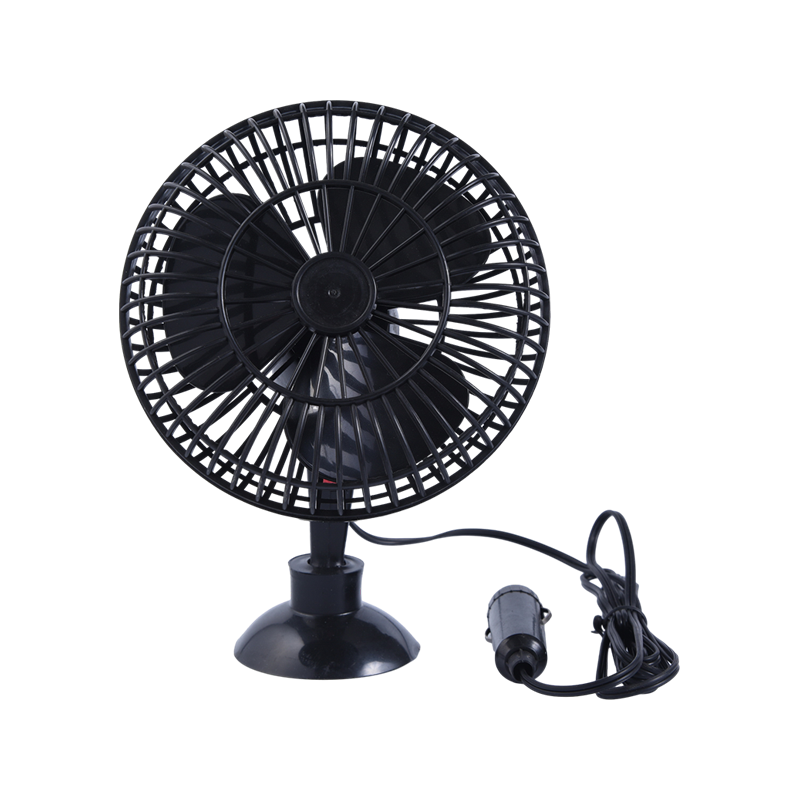
For driveway top-ups, where the engine can idle and the socket is within reach, a lighter-powered multifunctional unit is the straightforward choice. A model such as the HC640 multifunctional vehicle air pump is designed to plug into a standard accessory socket, so it stays useful for tires, bicycle tubes and balls without a charging routine to remember.
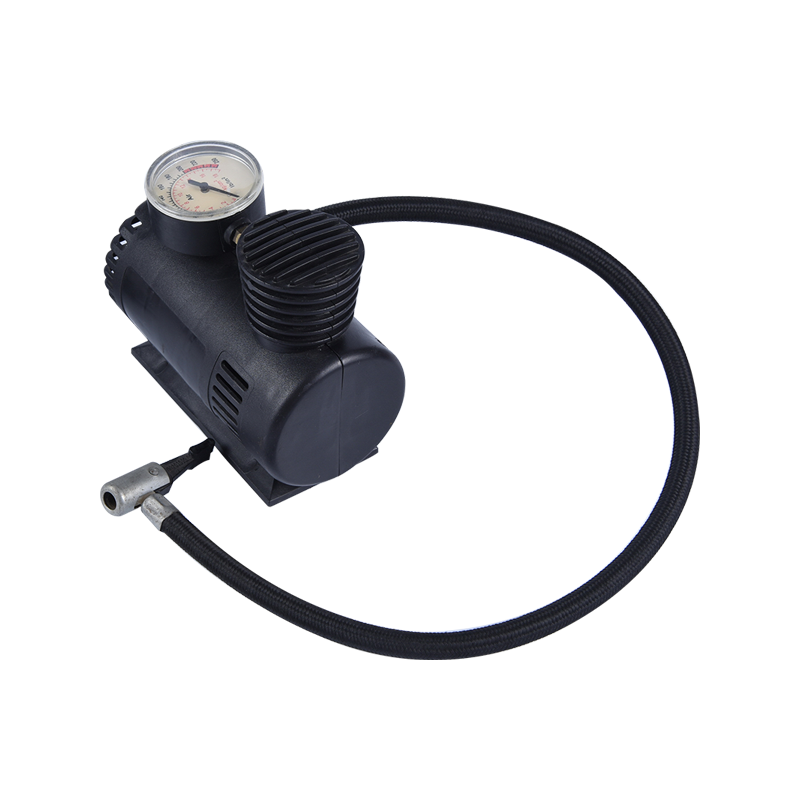 HC640 Multi-Functional Vehicle Air Pump with Pressure GaugeLighter-powered multifunctional pump for driveway tire top-ups, bicycle tubes and balls, with built-in pressure gauge and compact vehicle storage.View Product →
If you would rather set a target pressure and step away, look for a digital gauge. A digital display removes the guesswork of judging an analogue needle in poor light and makes repeat checks on four tires far quicker, which is where the HC6593 portable vehicle air pump with digital pressure gauge fits.
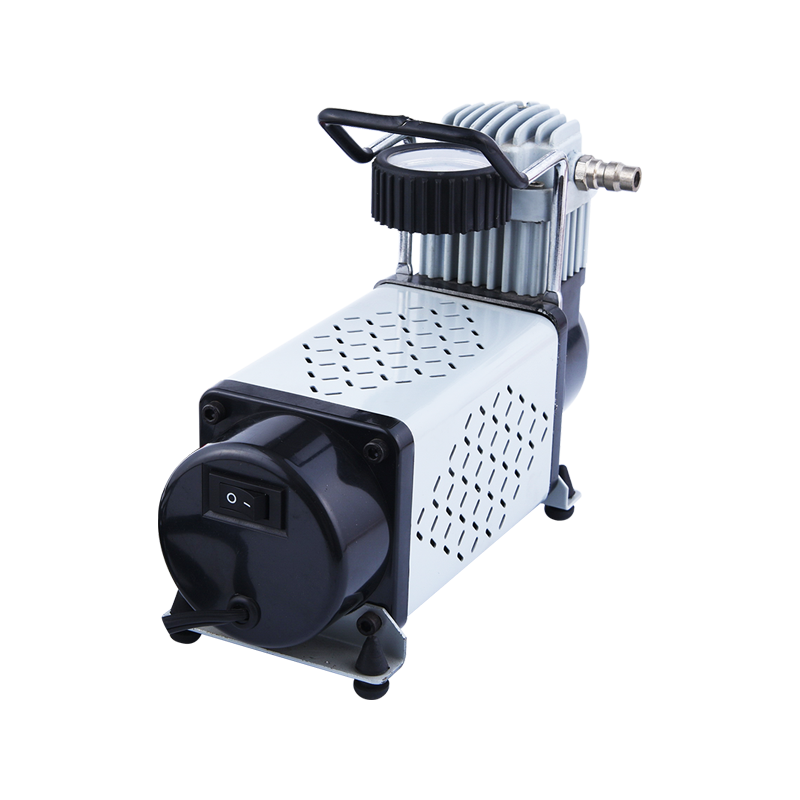 HC659-3 Portable Vehicle Air Pump with Digital Gauge12V DC inflation tool with digital pressure display and metal gauge, suited to car, motorcycle and bicycle tires plus emergency roadside top-ups.View Product →
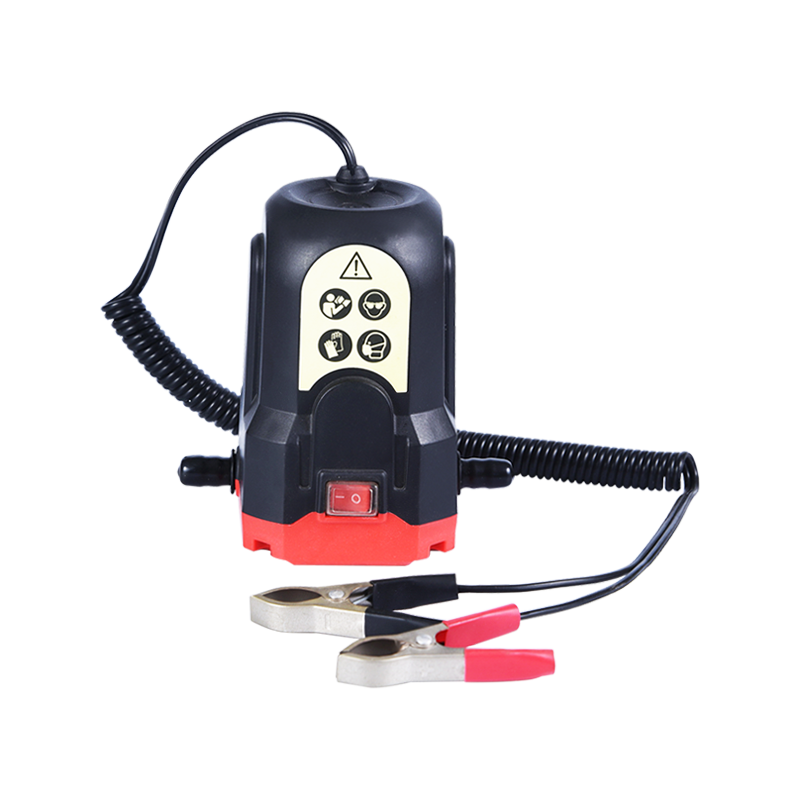
When the work happens away from the car, at a campsite or on a bicycle in a hallway, the pump has to be independent of the vehicle entirely. A rechargeable unit with its own charger, such as the HG1238 rechargeable pump for vehicle, keeps that independence, provided you respect the charging habits described above.
 HG1238 12V/24V Rechargeable Vehicle Pump for Liquid TransferPortable rechargeable pump for liquid extraction, camping, irrigation and vehicle maintenance, with included pipe and battery-clip cable.View Product →
Whichever route you take, compare the pump's draw against your socket fuse, match the chuck to the valves you own, and treat the charger as part of the tool rather than an accessory. The wider automotive air pump range follows the same principle: a pump is only as good as the power feeding it.
Mistakes That Shorten Pump Life
- Running past the duty cycle because "one more tire" seems quicker than waiting.
- Replacing a blown accessory fuse with a higher rating instead of checking the pump's draw.
- Leaving the pump plugged in while the engine is cranked, which sends voltage spikes through the motor.
- Inflating four tires back-to-back in summer heat without letting the motor and hose cool.
- Trusting a stored pressure reading on a cold morning instead of checking the tire placard.
- Storing a battery pack fully charged in a hot trunk for an entire season.
FAQ
Do I need a battery charger if I already own a rechargeable inflator?
Only if the vehicle sits for long periods or if you want the option of running a 12V pump from the car. A rechargeable inflator needs its own charger; a maintenance charger is there to keep the starting battery healthy so the accessory socket stays reliable.
How long does a portable compressor take to inflate a car tire?
Roughly 1.5 to 3 minutes for a large-bore 12V pump and 3 to 6 minutes for a cordless unit, measured from 28 psi to 32 psi. Starting from a nearly flat tire, expect several times longer, plus rest periods.
Can I run a 12V compressor from a jump-starter pack?
Some jump-starters offer a 12V outlet, but check the continuous output rating rather than the peak. A pack rated for engine cranking may still object to a 12-amp load running for several minutes.
Can I inflate a tire with the engine switched off?
Yes, for one or two tires. Beyond that you are drawing the starting battery down, and a pump that needs 12 to 15 A will discharge a healthy battery faster than most drivers expect.
Is a larger cylinder always better?
Not for a 15 A socket. Larger cylinders inflate faster but pull more current and produce more heat, so the right size depends on your vehicle's fuse rating and how many tires you inflate in one session.
A portable air compressor and battery charger only works as a system when the power source and the job match. Decide first whether the pump can rely on the car, then pick cylinder size, gauge type and duty cycle around that answer. Buy the charger with the tool, keep the pack partly charged between trips, and you will rarely be the driver standing beside a flat tire with a flat battery.