English
 Português
 عربى
عربى 中文简体
中文简体Content
- Why Choosing the Right Manufacturer Matters More Than the Price
- Step 1: Define Your Requirements Before You Start Sourcing
- Step 2: Verify the Manufacturer's Credentials and Track Record
- Step 3: Evaluate Production Capacity and Manufacturing Capability
- Step 4: Assess Product Quality and Technical Specification Accuracy
- Step 5: Check Customization, Service, and After-Sales Support
- Step 6: Manage the Commercial and Logistical Details
- Final Checklist: 10 Questions to Ask Any Shortlisted Manufacturer
- Conclusion: Build a Long-Term Partnership, Not a One-Time Transaction
Why Choosing the Right Manufacturer Matters More Than the Price
When you source a car air compressor from China, the lowest quote can feel like the safest way to protect your margin. In practice, that decision often leads to the opposite outcome. A low-priced unit usually reflects concrete compromises: thinner power cords that overheat, motors with inflated wattage ratings, pressure gauges that drift out of calibration, and housings that crack after a few months of use in a trunk. Since these devices connect directly to a vehicle's 12V electrical system, a defective unit also carries a genuine safety risk. One batch of substandard goods can trigger a cascade of returns, chargebacks, and shipping costs that far exceeds any amount you saved on the unit price.
The goal of this guide is to give you a repeatable evaluation framework. Instead of relying on glossy websites or aggressive sales pitches, you will learn how to check four things: credentials and certifications, production capacity, product quality and specification accuracy, and service and delivery reliability. Each section includes a concrete verification action you can take, not just a principle to consider.
Step 1: Define Your Requirements Before You Start Sourcing
The first mistake buyers make is contacting suppliers without a clear specification sheet. If you do not know exactly what you need, every manufacturer will show you what they want to sell, not what fits your market. Start by defining four variables before you send a single inquiry.
Voltage Compatibility and Target Vehicle Segment
Car air compressors are not one-size-fits-all. A unit built for a compact passenger car may struggle with a pickup truck's larger tires, while a heavy-duty model may be overkill for a city commuter. Decide whether your target market needs a 12V-only unit or dual-voltage compatibility (12V and 24V). Dual-voltage support is essential if you plan to sell to commercial truck fleets or off-road vehicle owners. For example, a 12V/24V dual-voltage design is worth prioritizing when your distribution network covers both consumer cars and commercial vehicles.
Pressure Gauge Type: Mechanical vs. Digital
Next, determine whether your product needs a pressure gauge and what type it should be. Mechanical gauges are cheaper and durable, but they are less precise. Digital gauges provide a clear, accurate readout and appeal to buyers who want precise control over inflation. A portable vehicle air pump with digital pressure gauge suits the premium segment of the market, where retailers can explain the added value of accuracy. If your strategy is cost-competitive, a mechanical gauge model is often sufficient. Make this decision early because it directly affects the bill of materials and the final price.
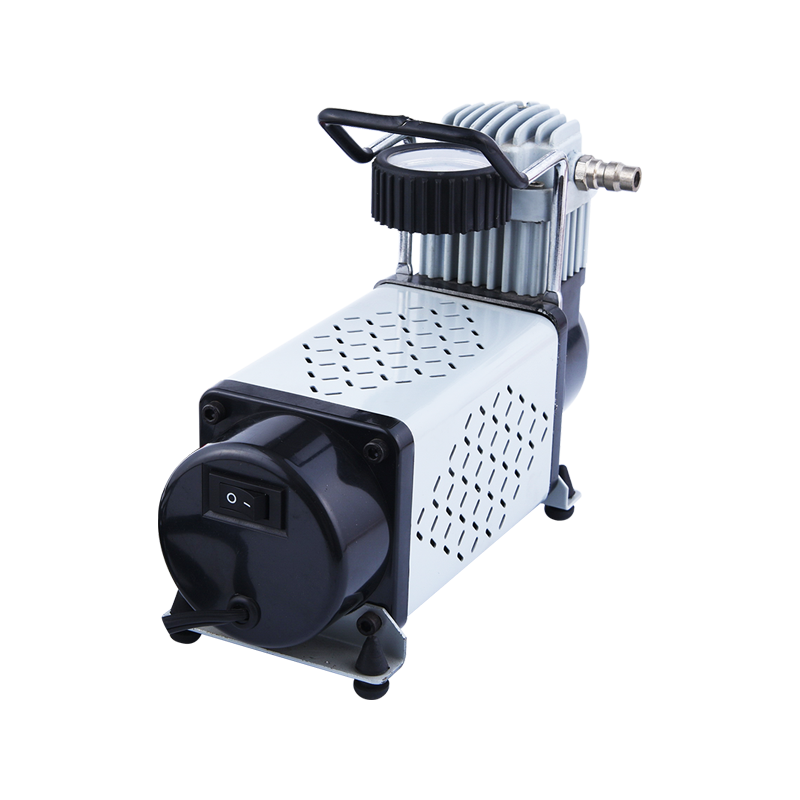 Wholesale HC659-3 Portable Vehicle Air Pump With Digital Pressure Gauge SupplierNingbo Kede Electric Technology Development Co., Ltd is China OEM/ODM HC659-3 Portable Vehicle Air Pump With Digital Pressure Gauge suppl...View Product →
Power Source and Portability
Clarify whether the pump should draw power from the cigarette lighter socket, use battery clips, or run on a rechargeable internal battery. Cigarette-lighter-powered units are the most common and least expensive, but they limit the pump to cars with compatible sockets. Rechargeable units offer more flexibility for roadside emergencies but add cost and weight. Estimate your annual order volume now, because this number determines whether a manufacturer will treat you as a serious buyer or a one-off customer.
Step 2: Verify the Manufacturer's Credentials and Track Record
Once you have a clear specification, the next challenge is separating genuine factories from trading companies that pose as manufacturers. This is the most critical step in the entire sourcing process, and it is also the one where buyers often cut corners.
Request Business and Export Documentation
Ask every candidate for a copy of their business license and export registration documents. Check that the company name, legal entity, and registered address all match the information on their website and email signature. A trading company will usually list a different address than the actual production site. If the documents show one address and the website claims another, treat that discrepancy as a warning sign.
Verify Certificates in Official Databases
Certifications can be copied, edited, or fabricated. Never accept a PDF certificate as proof of compliance. Instead, request the certificate number and look it up in the issuing body's official database. Also, understand what each certification actually means. ISO 9001-2000 is a quality management system standard; it does not certify that a product is safe. CE and ROHS cover electrical and environmental compliance for the European market, while GS is a voluntary safety mark recognized in Germany. A manufacturer that holds both ISO and CE/ROHS/GS certifications shows a credible commitment to compliance. You can verify this across a range of products; for instance, a manufacturer's corporate profile may state that it has passed ISO9001-2000 and obtained CE, ROHS, and GS certifications, and it should be able to produce the certificate numbers for your audit.
Look for a Verifiable Track Record
Longevity and export experience matter. A factory that has been operating since 1992 and exports to more than 40 countries, according to its official corporate profile, carries far more practical experience than a startup with three years of history. Look for manufacturers that are willing to show you their facility. Real factories usually have a factory tour section on their website or can arrange a live video walkthrough. A manufacturer that openly displays its factory profile and certifications invites scrutiny; one that only shares marketing photos is more likely to be hiding something.
Step 3: Evaluate Production Capacity and Manufacturing Capability
Knowing that a factory exists is not enough. You need to know whether it can actually produce your order on time, at the right quality, and with room to grow as your business expands.
Assess Facility Scale and Workforce
Facility size and headcount are the first indicators of production capacity. Industry benchmarks are useful here. A manufacturer with a 35,000-square-meter facility and over 100 technical staff and workers has the physical capacity to run continuous production lines. Compare that with a small workshop that can only handle a few hundred units per month. Ask each candidate for their monthly production capacity for car air compressors specifically, not just their overall output. Also, ask about their current order backlog. A factory that is already at full capacity may not be able to meet your delivery deadline.
Check Whether Products Are Made In-House
Some companies assemble products from purchased parts but present themselves as full manufacturers. The distinction matters because in-house production gives the supplier direct control over quality and allows for easier customization. A manufacturer that produces multiple vehicle electrical products, such as air compressors, fans, heaters, and kettles, typically has a broader manufacturing infrastructure and tighter quality control systems than a single-product assembler.
Consider the Logistics Advantage
Location directly impacts shipping cost and lead time. A factory located near a major port or airport can reduce inland freight costs and shorten the time from order to departure. For example, a manufacturer based in Yuyao, approximately 50 kilometers from Ningbo Airport and close to the Beilun Port, benefits from convenient access to international shipping lanes. That geographic advantage translates into lower logistics costs and faster delivery for importers.
Step 4: Assess Product Quality and Technical Specification Accuracy
Specification sheets are marketing documents. The real test is whether a product's actual performance matches its stated specifications. This is where many imports fail.
Demand Detailed Technical Specifications
Request a full specification sheet for every model you are considering. The sheet should list cylinder diameter, maximum inflation pressure in PSI and Bar, airflow rate in liters per minute, power in watts, voltage range, power cord length, and cigarette lighter plug compatibility. A manufacturer that provides complete, precise specifications is more confident in its product quality than one that gives vague answers like "standard size" or "normal power."
Understand the Significance of Cylinder Diameter
Cylinder diameter directly correlates with airflow and inflation speed. A larger cylinder moves more air per stroke, which means faster inflation. For instance, a 30mm large-cylinder-diameter vehicle air pump delivers noticeably higher airflow than a typical 22mm or 25mm unit. However, larger cylinders also generate more heat under sustained operation. Check how the manufacturer manages heat dissipation and whether the motor can sustain long-running cycles without overheating. Insist on seeing the duty cycle or continuous operation rating in the specification.
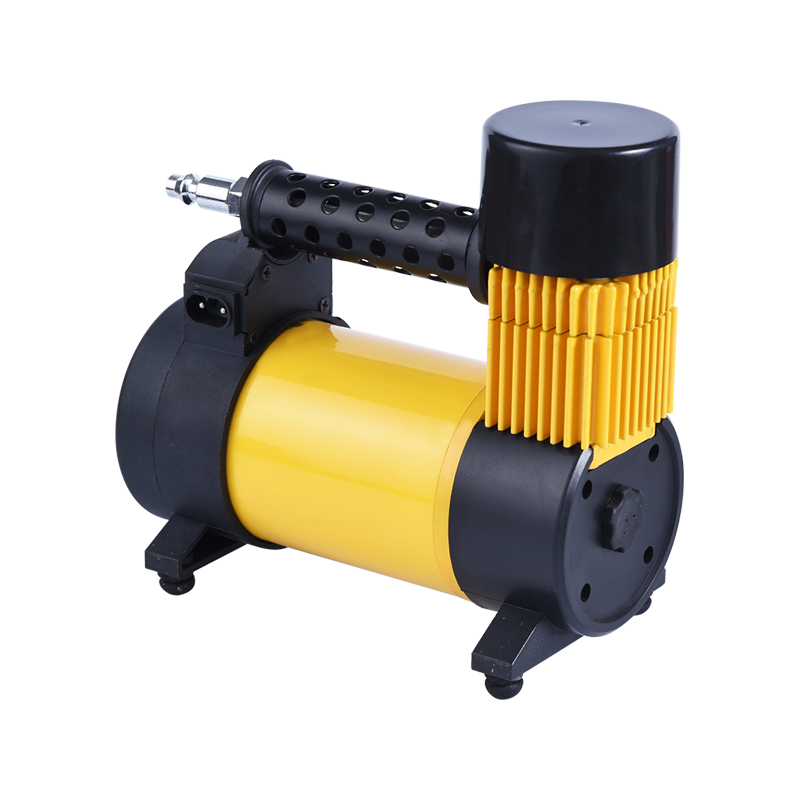 Wholesale HC668 30mm Large Cylinder Diameter Vehicle Air Pump Suppliers, FactoryNingbo Kede Electric Technology Development Co., Ltd is China OEM/ODM HC668 30mm Large Cylinder Diameter Vehicle Air Pump suppliers and H...View Product →
Test the Sample Independently
No amount of documentation replaces hands-on testing. Order samples from at least two shortlisted manufacturers and test them side by side. Measure the time to inflate a standard tire from 0 to 30 PSI. Run the pump continuously for 10 minutes and check for overheating, unusual noise, or a drop in airflow. Verify the accuracy of the pressure gauge against a reference gauge. Open the casing if possible and check the motor windings, cylinder material, and wiring gauge. Pure copper windings conduct better and last longer than aluminum; thin wiring is a fire hazard, not a cost-saving feature.
A strong product line signals manufacturing maturity. A manufacturer that offers multiple models across different price and performance levels, from basic portable units to heavy-duty high-flow models, demonstrates that it can handle varying buyer requirements. After evaluating the technical details, you can see the full range of what reliable production looks like across the board in our full car air compressor product line.
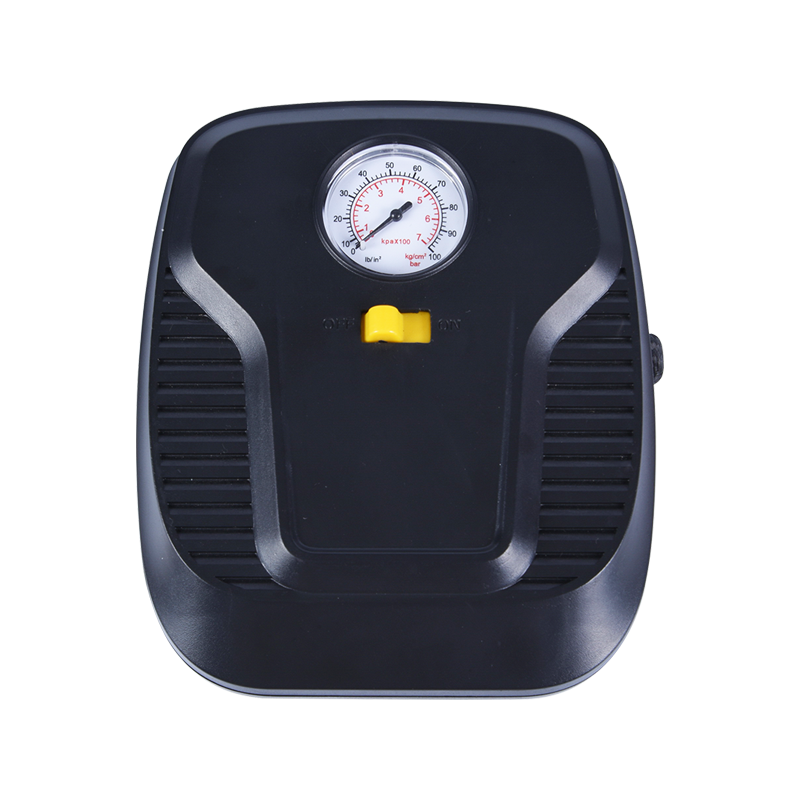 Custom Vehicle Air Compressor Manufacturers, OEM/ODM CompanyNingbo Kede Electric Technology Development Co., Ltd is China vehicle air compressor manufacturers and OEM/ODM vehicle air compressor com...View Product →
Step 5: Check Customization, Service, and After-Sales Support
Your relationship with a manufacturer extends far beyond the first order. A reliable partner supports your brand, adapts to your market, and stands behind the product when issues arise.
Confirm OEM and ODM Capabilities
Ask directly whether the manufacturer supports OEM (private label) and ODM (design customization) orders. OEM means the supplier puts your logo on an existing product. ODM involves modifying the product's appearance, specifications, or packaging to meet your requirements. Some manufacturers offer only OEM, which limits your ability to differentiate. A factory that handles custom color, custom packaging, and multilingual instruction manuals is a stronger long-term partner.
Gauge Communication Responsiveness
Send a technical question during your time zone's business hours and measure how long it takes to get a professional response. A manufacturer that replies within 24 hours with a clear, technical answer is one that values export business. A supplier that takes three days to respond or provides generic, non-committal answers is unlikely to improve once you become a customer.
Define the After-Sales Policy in Writing
Before placing any order, ask for the warranty period and the process for handling defective units. Will the manufacturer replace defective units, issue a credit, or refund a portion of the payment? Get the answer in writing, not just in a chat message. A reasonable manufacturer will offer a warranty of at least 12 months and a clear claims process. If a supplier hesitates to commit to a written policy, that is a major red flag.
Step 6: Manage the Commercial and Logistical Details
With a shortlist in hand, you still need to protect yourself commercially before any container leaves the port.
Negotiate Payment Terms That Protect Both Parties
For the first order, use a combination of a T/T deposit (typically 30%) and the balance paid before shipment. This structure protects you because the manufacturer cannot negotiate shipping documents without the final payment, and it protects them because the deposit covers raw material costs. For larger orders, consider a letter of credit (L/C) to formalize the transaction through banking channels. Avoid paying 100% in advance for a first order, no matter how persuasive the salesperson is.
Clarify Incoterms and Logistics Responsibility
Define the trade terms explicitly. FOB (Free on Board) places the shipping responsibility on you once the goods are loaded at the port; CIF (Cost, Insurance, and Freight) puts the manufacturer in charge of ocean freight and insurance; EXW (Ex Works) shifts all transportation costs to you. Confirm the port of departure and request the exact packaging dimensions and weight for each model so you can calculate freight costs accurately. A manufacturer near a major port like Beilun can offer more favorable FOB terms because the inland transport cost is lower.
Allow Third-Party Inspection
Confirm in advance that the manufacturer accepts pre-shipment inspections by third-party agencies such as SGS or BV. A supplier that welcomes external inspections is confident in its quality control. One that resists or adds unnecessary friction to the inspection process is likely hiding defects that will surface after shipment.
Final Checklist: 10 Questions to Ask Any Shortlisted Manufacturer
Print this list and send the questions to every candidate. Compare the quality of the answers alongside your sample test results.
- Can you share your business license and export registration documents?
- What are your ISO and CE/ROHS/GS certificate numbers for verification?
- Are you the factory owner or a trading company? Can we schedule a live video tour of your production line?
- What is your monthly production capacity for car air compressors?
- What is your MOQ for OEM and ODM orders, respectively?
- Can you provide detailed specification sheets including cylinder diameter, max PSI, flow rate, and voltage compatibility?
- What customization options do you support — logo printing, color, packaging, instruction manuals?
- What is your warranty period and after-sales policy for defective units?
- What payment terms do you accept for first-time orders?
- Are third-party inspections acceptable before shipment?
Conclusion: Build a Long-Term Partnership, Not a One-Time Transaction
The most profitable sourcing relationships are not single transactions. They are partnerships where the manufacturer learns your market, improves the product with each iteration, and helps you stay competitive on quality and price. The evaluation framework in this guide points you toward that kind of relationship, but the actual vetting requires your time and attention.
Do not skip the verification steps, even when a supplier seems impressive. Cross-check certifications, tour the factory by video, test samples independently, and document every commercial commitment in writing. Start with a sample order or a small batch to confirm that the manufacturer performs in practice as well as it does on paper. Once you find a supplier that checks every box, grow the relationship deliberately.