English
 Português
 عربى
عربى 中文简体
中文简体At 6:40 a.m., with the morning commute already urgent, you notice the left front tire is down to 24 psi. You have two choices: hunt for an open service station or reach for the portable air compressor tire inflator in your trunk and fix it in about three minutes. For most drivers, the best portable air compressor tire inflator is a 12V corded unit rated for at least 100 psi maximum pressure, pushing roughly 35–50 L/min of airflow, and fitted with a gauge accurate enough to trust. That combination covers everyday sedans, weekend SUVs, and roadside emergencies without the cost or bulk of a workshop-grade compressor.
Content
What Makes a Portable Tire Inflator "Best"?
Four factors carry most of the weight when you judge a portable tire inflator: maximum pressure, flow rate, gauge accuracy, and duty cycle. A unit that performs well on all four will inflate a passenger tire in reasonable time, stop before it overheats, and land on the target pressure without guesswork.
Maximum Pressure
Look for at least 100 psi, with 120–150 psi giving you headroom for SUV and light truck tires as well as future flexibility. A unit that barely reaches 100 psi will struggle on cold mornings when tire pressures are already at their lowest.
Flow Rate
Flow rate, measured in liters per minute (L/min), determines how long you stand next to the car. A 35 L/min inflator takes roughly three to four minutes to add 10 psi to a mid-size sedan tire; a 50 L/min unit cuts that to about two minutes. Larger cylinder diameters generally produce higher flow, which is why the 30 mm cylinder design in some compact inflators deserves close attention.
Gauge Accuracy
A gauge that reads 3–4 psi high means underinflated tires, uneven tread wear, and a slightly heavier fuel bill. Digital gauges typically resolve to 0.5 or 1 psi; budget analog gauges can drift by several psi over time. A reliable readout is not a luxury—it is the whole point of topping up a tire to a known pressure.
Duty Cycle
Duty cycle tells you how long the pump can run before it needs to cool down. Most portable 12V inflators quote around 30% at 100 psi—run for three minutes, rest for seven. If you plan to fill multiple tires in one session or inflate larger tires regularly, look for a 40% or higher duty cycle, or the pump may shut down halfway through the second tire.
Corded 12V vs. Battery-Powered Inflators
For everyday car use, a 12V corded inflator wins on reliability and value. Battery-powered units are convenient when no car outlet exists—camping grounds, remote parking lots, or a stranded vehicle—but they add battery weight, charging duties, and a noticeably higher price. The table below summarizes the practical differences.
| Factor | 12V Corded | Battery-Powered |
|---|---|---|
| Runtime | Unlimited while the engine runs | 20–40 minutes per charge |
| Output consistency | Steady pressure from the vehicle battery | Drops as the battery voltage falls |
| Weight and size | Generally lighter and more compact | Heavier because of the battery pack |
| Best use case | Daily commutes, road trips, regular top-ups | Remote sites, emergency kits, multi-vehicle households |
One caution with 12V models: run the engine while inflating so you do not drain the vehicle battery. If you are considering a unit for roadside or outdoor use, check whether portable vehicle air pumps work well in outdoor or emergency situations before you commit.
Key Specifications to Check Before Buying
Not every spec sheet tells you what you actually need. This checklist mirrors how we evaluate a portable air compressor tire inflator for passenger-car duty.
| Spec | Recommended Range | Why It Matters |
|---|---|---|
| Maximum pressure | 100–150 psi | Headroom for sedan, SUV, and light truck tires |
| Flow rate | 35–50 L/min | Below 30 L/min, even a 10 psi top-up feels slow |
| Duty cycle | 30% or higher at maximum pressure | Prevents overheating during multi-tire sessions |
| Gauge type | Digital with 0.5–1 psi resolution | Budget dial gauges can be off by several psi |
| Hose length | 60–90 cm (24–36 in) | Longer hose means fewer repositioning headaches |
Best Portable Air Compressor Tire Inflator Picks
Based on the criteria above, three models from the Kede automotive air compressor lineup fit different driver profiles, and each one targets a specific weakness found in budget inflators.
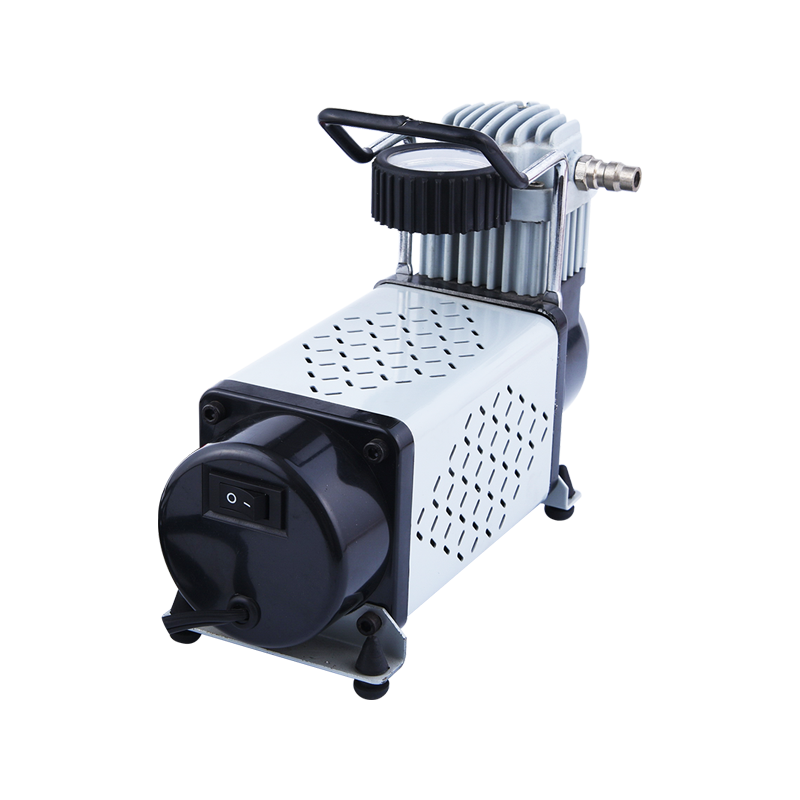 HC659-3 Portable Vehicle Air Pump With Digital Pressure GaugeThis portable air pump with a digital pressure gauge suits drivers who want precise readings and easy monitoring, addressing the common weakness of inaccurate gauges in budget inflators.View Product →
 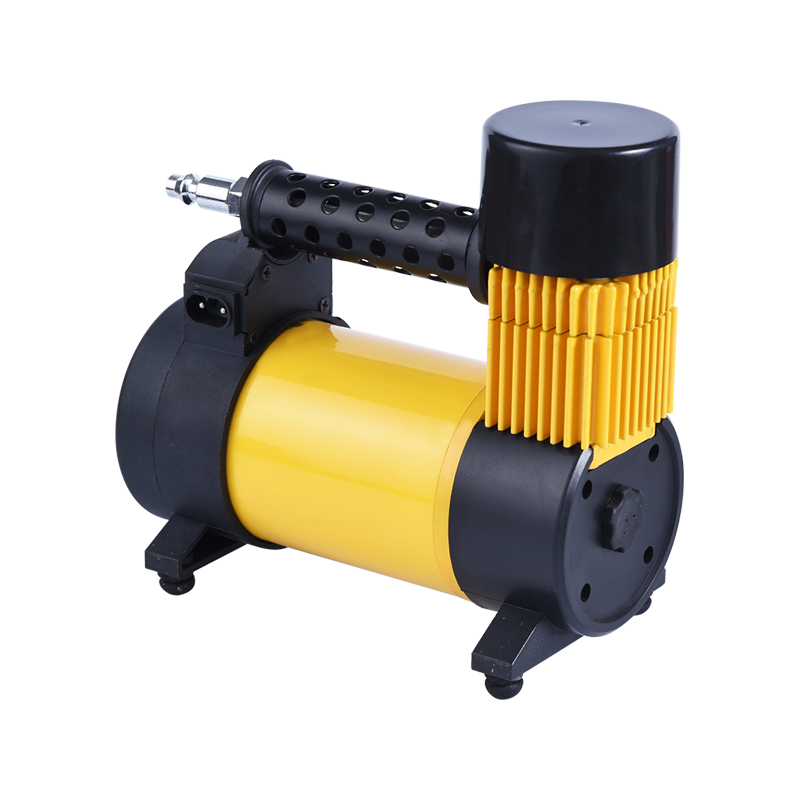 HC668 30mm Large Cylinder Diameter Vehicle Air PumpFeaturing a 30mm large cylinder diameter, this vehicle air pump targets users who need faster inflation and more robust performance, making it a solid choice when power is a priority.View Product →
  HC651B Portable Vehicle Air Pump With Pressure GaugeEquipped with a built-in pressure gauge, this portable pump offers straightforward pressure control for everyday topping up, appealing to drivers seeking a practical and dependable budget-friendly solution.View Product →
How to Use a Portable Tire Inflator Correctly
Even the best inflator can cause problems if you skip the basics. Use this sequence every time you top up a tire.
- Find the recommended cold tire pressure on the placard inside the driver's door jamb or in the owner's manual. Ignore the number molded into the tire sidewall.
- Remove the valve cap and press the hose connector fully onto the valve stem. A loose connection produces a hissing leak and a false reading.
- Start the engine before plugging in a 12V inflator to protect the vehicle battery.
- Set the target pressure on a digital model, or watch the gauge closely and stop a bit early, because pressure rises fast in the final seconds.
- If you overshoot, release air with the small bleed button on the gauge or by gently pressing the valve core. Then recheck.
- Install the valve cap and check the same tire again after a short drive once it has cooled.
Also, test your inflator every few months, especially if it lives in a trunk where heat and humidity fluctuate. Hoses, seals, and gauges all drift with age.
Common Buying Mistakes
These errors show up constantly in tire-inflator discussions, and they lead to returns, frustration, and wasted money.
- Choosing a unit on maximum pressure alone while ignoring flow rate. A 150 psi rating is useless if the pump needs 12 minutes to add 10 psi.
- Ignoring the duty cycle, then wondering why the inflator stops mid-session as the thermal cutoff kicks in.
- Buying the cheapest option, which usually means a plastic cylinder, a weak motor, or both.
- Overlooking cord and hose length. A short power cord that barely reaches the rear tire becomes a daily annoyance.
- Assuming one inflator works for every valve type. If you have Presta bicycle valves or RV tires, confirm the included nozzles and adapters fit before you buy.
Frequently Asked Questions
Can a portable tire inflator handle truck or RV tires?
A small passenger-car inflator can add pressure to a lightly loaded truck tire, but it will take longer and run closer to its duty-cycle limit. For RVs and heavy truck tires, choose a high-flow model with at least 120 psi, like the HC668 with its 30 mm cylinder, and let the unit cool between tires.
How often should I check tire pressure?
At least once a month and before any long trip. Tire pressure drops naturally by 1–2 psi per month, and faster when the weather turns cold. Regular checks with a trustworthy gauge are the cheapest way to extend tire life and protect fuel economy.
Is it safe to leave an inflator running unattended?
No. A leaking valve stem, a slipping hose connector, or an over-pressurized tire can all cause damage in the few minutes you are away. In addition, running a 12V inflator past its duty-cycle limit can overheat the motor and permanently shorten its life.
Are cordless battery inflators worth the extra money?
For someone who inflates tires only at home or along a regular commute, no. For outdoor trips, multi-vehicle households, or emergency go-bags, the convenience of a self-contained unit can justify the higher price. The trade-offs are limited runtime, battery maintenance, and a heavier package.
Final Thoughts
The best portable air compressor tire inflator is not necessarily the most expensive one on the shelf. It is the unit that matches your vehicle's tire pressures, your filling habits, and your tolerance for slow inflation. Target at least 100 psi maximum pressure, 35 L/min or more of airflow, a digital or accurately calibrated gauge, and a duty cycle that fits the number of tires you expect to fill in one session. Keep it in the trunk, check your tire pressures monthly, and a soft tire on a busy morning becomes a three-minute fix instead of a roadside emergency.